Navigating Amazon Europe Websites: A Comprehensive Guide
Thinking about selling your products across the pond? It’s a big step, and honestly, it can feel a bit overwhelming at first. You’ve probably heard a lot of different things about selling on amazon europe websites, and maybe some of it sounds complicated. But here’s the thing: there’s a huge number of people in Europe who want to buy things online, and if you’re not there, you’re missing out. This guide is here to break down what you need to know, from understanding the customers to figuring out the tricky bits like taxes and shipping. We’ll help you make sense of it all so you can decide if it’s the right move for your business.
Key Takeaways
Europe has a massive online shopper base, close to 600 million people, making it a prime spot for e-commerce growth.
Each European country has its own style and preferences, so tailoring your products and how you present them is important for connecting with local buyers.
Getting your products to customers in Europe involves understanding shipping rules and finding smart places to store your goods, especially since the UK and EU are now separate.
Making sure your products meet European standards for things like labels and safety is a must, and you might need a local contact person to handle this.
While there are challenges like taxes and different rules, many sellers find that working with the right help and planning carefully makes expanding into amazon europe websites much more manageable.
Unlocking the European Ecommerce Treasure Chest
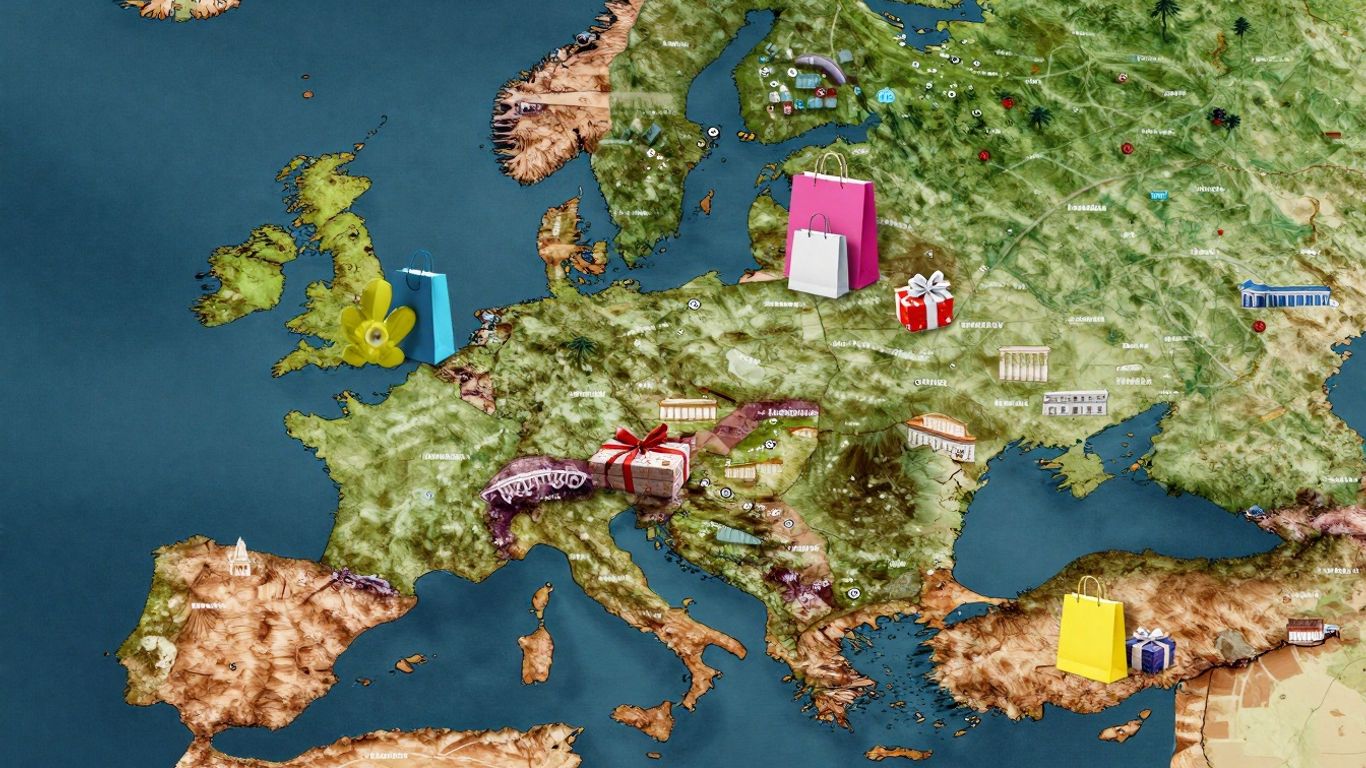
So, you’re thinking about selling your stuff across the pond, huh? Europe. It sounds big, and frankly, it is. But it’s also a massive opportunity, like finding a hidden stash of gold coins just waiting for you to pick them up. We’re talking about a market with nearly 600 million potential customers. That’s a lot of people who might want what you’re selling.
The Vast European Consumer Landscape
Let’s get real for a second. Europe isn’t just one big happy shopping mall. It’s a collection of countries, each with its own quirks and preferences. Think of it like a giant buffet – tons of options, but you can’t just grab everything and expect it to taste good. You need to know what people actually like.
Germany: Loves quality, reliability, and often pays a bit more for it.
France: Appreciates style, luxury, and a good deal.
Italy: Passionate about design, food, and family-oriented products.
Spain: Enjoys value, convenience, and vibrant, colorful items.
Nordics: Prioritize sustainability, functionality, and minimalist aesthetics.
This diversity means there are tons of little pockets, or niche markets, where your product might be exactly what someone’s been looking for. Don’t just think broad strokes; look for those specific groups.
The sheer size of the European market means that even a small percentage of market share can translate into significant revenue. It’s not about conquering the whole continent overnight, but about finding your footing in specific, receptive segments.
Cultural Nuances and Niche Opportunities
This is where things get interesting. Because everyone in Europe isn’t the same, you’ve got a chance to really stand out. If you’re selling, say, artisanal dog treats, you might find a huge following in a country where pet ownership is super high and people treat their furry friends like royalty. Or maybe your eco-friendly cleaning supplies are a perfect fit for the environmentally conscious consumers in Scandinavia. Identifying these cultural preferences and catering to them is key to not just selling, but thriving. It’s about speaking their language, literally and figuratively. For instance, understanding the economic growth potential through empowering female entrepreneurship could open up new product lines or marketing angles [6086].
The Amazon Advantage for Global Reach
Now, why Amazon? Because they’ve already built the roads. They have warehouses, delivery networks, and a customer base that trusts them. For us sellers, this means you don’t have to build everything from scratch. Amazon gives you a ready-made platform to reach millions. It’s like getting a VIP pass to the biggest party in town. You can use their infrastructure to get your products to customers across different countries without needing your own fleet of trucks and warehouses scattered everywhere. It simplifies the whole process of getting your goods from your workshop to their doorstep, making that European expansion feel a lot less like a wild goose chase and more like a well-planned expedition.
Demystifying the European Amazon Maze
Alright, so you’re thinking about selling on Amazon in Europe. Sounds exciting, right? But before you start dreaming of euros and pounds, let’s talk about the bits that can feel like a puzzle. It’s not exactly a walk in the park, but hey, nobody said conquering new markets would be easy. Think of it like trying to assemble IKEA furniture without the instructions – a bit confusing, but totally doable if you know what you’re doing.
Navigating VAT and Tax Complexities
Value Added Tax, or VAT, is one of those things that can make your head spin. Each European country has its own rules, and they can change. It’s not just about adding a percentage; it’s about understanding where your goods are coming from, where they’re going, and how that affects what you owe. Getting VAT wrong can lead to some serious headaches, so it’s worth getting it sorted early.
Here’s a quick rundown of what you’ll bump into:
Registration Thresholds: Different countries have different sales limits before you must register for VAT.
Reporting Periods: How often you need to file your VAT returns varies.
Intrastat Declarations: For goods moving between EU countries, you might need to report these movements.
Import VAT: When goods enter the EU, import VAT usually applies.
Trying to figure out VAT on your own is like trying to untangle a ball of Christmas lights in the dark. It’s best to get some help or use software that can manage it for you.
Product Testing and Regulatory Variations
Europe isn’t just one big happy market with the same rules everywhere. The UK and the EU have their own sets of regulations, and they can be quite different. What’s perfectly fine in one place might need a tweak for another. This means your product might need different testing or certifications depending on where you plan to sell it. For example, a product that needs a CE mark for the EU might have different requirements or labeling needs for the UK market post-Brexit.
CE Marking: Required for many products sold in the EU, indicating conformity with health, safety, and environmental protection standards.
UKCA Marking: The UK’s equivalent to CE marking, introduced after Brexit.
Specific Product Standards: Think about electronics, toys, cosmetics – each has its own set of rules.
The Labyrinth of Service Providers
When you start selling across Europe, you’ll likely need a whole team of helpers. You might need someone for VAT, someone else for customs, maybe a third party for product compliance, and yet another for warehousing. Juggling all these different companies can feel like you’re running a small circus. It takes time and effort to find the right ones, manage them, and make sure they’re all working together. Sometimes, you can find providers who offer a package deal, which can simplify things a lot. It’s like finding a multi-tool when you only expected a screwdriver – pretty handy!
Customs Brokers: To help with the paperwork when goods cross borders.
Tax Advisors: For all things VAT and corporate tax.
Compliance Consultants: To make sure your products meet all the necessary standards.
Logistics Partners: For warehousing and shipping within Europe.
Conquering European Logistics and Warehousing
Alright, let’s talk about getting your stuff from point A to point B across the pond. Shipping and warehousing in Europe can feel like a puzzle, but once you get the pieces in place, it’s surprisingly manageable. Think of it as setting up your own little European distribution network, but without the fancy suits and secret handshakes.
Shipping Documentation: The Unsung Hero
Seriously, don’t gloss over this. It’s the boring stuff that can cause the biggest headaches. Missing or incorrect paperwork is like showing up to a party without an invitation – you’re not getting in. We’re talking packing lists, commercial invoices, commodity codes, and all that jazz. Get it right, and your goods will glide through customs. Get it wrong, and you’ll be stuck explaining yourself, probably for a while. It’s not rocket science, and after a few tries, you’ll be a pro.
Strategic Warehousing for Continental Dominance
Now, this is where things get interesting. With the UK officially doing its own thing post-Brexit, you absolutely have to treat it as a separate market from the EU. Trying to lump them together is a recipe for confusion and extra costs. The smart move? Get warehouses strategically placed. Think about storing goods in places like the Netherlands; it can seriously cut down on distribution costs when you’re sending products to other European countries. It’s all about being smart with your inventory placement to keep things moving smoothly and save some cash.
Setting up shop with strategically positioned warehouses in both the UK and the EU is no longer a nice-to-have; it’s a necessity for efficient operations. This approach minimizes transit times and reduces the risk of customs delays, making your business more agile.
Treating the UK and EU as Separate Entities
This point deserves its own spotlight because it’s that important. The UK and the EU have different rules, different customs procedures, and frankly, different vibes. You can’t just assume what works for one will work for the other. This means separate VAT registrations, potentially different product compliance checks, and definitely separate shipping strategies. It might sound like extra work, but it’s the only way to avoid costly mistakes and keep your customers happy. Consider it a small price to pay for access to two massive markets. You can find some great deals on returned or open-box items through Amazon Warehouse, which can be a smart way to test products or stock up without breaking the bank.
Mastering Product Compliance in Europe
Alright, let’s talk about the nitty-gritty of making sure your products don’t accidentally cause an international incident. Europe, bless its organized heart, has its own set of rules for what you can sell and how you have to present it. It’s not just about slapping an English label on it and calling it a day. Think of it like trying to assemble IKEA furniture without the instructions – possible, but you’ll probably end up with a wobbly bookshelf and a lot of frustration.
Decoding EU and UK Product Labeling Standards
This is where things can get a bit tricky. The labeling requirements in the EU and UK are pretty specific, and they can differ from what you’re used to. It’s not just about listing ingredients; the exact wording you use can actually change how a product is classified. For instance, claiming a supplement can
Adapting Your Strategy for Local Tastes
So, you’ve decided to dip your toes into the vast European market. That’s great! But here’s the thing: Europe isn’t just one big happy family of shoppers. Each country, and sometimes even regions within countries, has its own quirks, preferences, and ways of doing things. Thinking you can just slap your US listing onto Amazon.de and expect fireworks? Think again. Making your product listings sing in the local language and tone is non-negotiable. It’s like showing up to a fancy dinner party in your pajamas – it just doesn’t quite fit.
Localizing Listings for Maximum Impact
This is where the real magic happens, or where it all falls apart if you don’t pay attention. It’s not just about translating words; it’s about translating meaning, culture, and desire. A direct translation might get the point across, but it often misses the mark on what actually makes someone click ‘buy’. Think about it: what sounds appealing in New York might sound a bit odd in Rome.
Here’s a quick rundown of what to consider:
Language is Just the Start: Beyond just translating, you need to adapt the style. Is the tone formal or casual? Are there specific idioms or slang that would connect better? For instance, a playful, informal tone might work wonders in the UK, while a more direct, benefit-driven approach might be better received in Germany.
Cultural Cues Matter: What colors are associated with good luck or bad luck? Are there specific holidays or events you can tie your promotions to? Understanding these subtle cultural signals can make your listing feel like it belongs, rather than an outsider.
Keyword Research, European Style: Don’t just use your US keywords. What are people actually searching for on Amazon.fr or Amazon.it? This requires dedicated research for each market. Tools can help, but sometimes a native speaker’s intuition is gold.
Image Adaptation: While product images are often universal, sometimes the context matters. Lifestyle shots showing your product being used in a way that resonates with local activities or settings can make a big difference.
Leveraging Technology for Cross-Channel Management
Okay, so you’re getting the hang of localizing. Now imagine doing that for, say, five different Amazon marketplaces (UK, Germany, France, Italy, Spain) and maybe even a few other platforms. Suddenly, managing all those listings, inventory levels, and promotions feels like juggling flaming torches while riding a unicycle. This is where technology swoops in, not to perform miracles, but to make things significantly less chaotic.
Think of it like this: instead of manually updating each Amazon store every time a price changes or a new review comes in, software can do a lot of the heavy lifting. These tools can sync your inventory across platforms, automate price adjustments based on competitor activity, and even help push your localized listings to the right marketplaces.
Centralized Dashboard: Manage all your marketplaces from one place. No more logging in and out of multiple accounts.
Inventory Syncing: Avoid overselling or underselling by keeping your stock levels updated in real-time across all channels.
Automated Pricing: Stay competitive without constant manual checks. Set rules and let the software do the work.
Listing Management: Tools can help you create, update, and translate listings more efficiently, pushing them to the correct Amazon domain.
The goal here isn’t to replace human strategy, but to automate the repetitive, time-consuming tasks. This frees you up to focus on the bigger picture: understanding your customers and refining your product offerings. It’s about working smarter, not just harder, especially when you’re spread across multiple countries.
Thinking Expansively Across European Borders
Once you’ve got the hang of adapting to individual markets, it’s time to zoom out. Europe’s proximity is a huge advantage. Unlike the vast distances in the US, you can often ship products between European countries relatively quickly and affordably. This means you can potentially serve multiple markets from a single, well-placed warehouse. It’s about seeing the continent not as a collection of separate countries, but as a connected network of consumers.
Consider how your logistics can support this. Can you position inventory strategically to reach the most customers efficiently? Are you treating the UK and the EU as distinct entities for shipping and customs, or are you trying to lump them together (which, spoiler alert, doesn’t usually work well post-Brexit)?
Multi-Country Fulfillment: Explore options like Amazon’s Pan-European FBA or setting up your own distribution centers to serve multiple countries from one location.
Shipping Strategy: Understand the customs requirements and shipping times between different European countries. A product shipped from Spain to France is very different logistically from shipping from Spain to Poland.
Marketplace Prioritization: You don’t have to launch everywhere at once. Identify which markets have the highest potential based on your product and target audience, and focus your initial efforts there before expanding further.
It’s a big continent, and with the right approach, it can feel like one giant, accessible marketplace. Just remember to respect the local flavors along the way.
Overcoming Hesitations for European Expansion
Addressing Misconceptions About EU/UK Market Entry
Look, thinking about selling your stuff across the pond to Europe can feel like staring up at Mount Everest. There are all these stories about complicated taxes, weird product rules, and shipping that seems to take forever. It’s easy to get bogged down by the “what ifs.” For instance, many sellers worry about the sheer number of different service providers they’ll need to wrangle – it sounds like a full-time job just managing the managers. Then there’s the whole VAT thing, which, let’s be honest, can make your head spin faster than a washing machine on high.
Here are some common worries that keep sellers up at night:
VAT and Tax Shenanigans: The European tax system is a beast of its own. Figuring out where to register, what to charge, and how to file can feel like deciphering ancient hieroglyphs.
Product Rules Galore: What’s perfectly fine in the US might need a whole new label, a different material, or even a special stamp of approval to be sold in, say, Germany or France.
Shipping Nightmares: Getting your products from your doorstep to a customer in Spain can involve customs forms that look like novels and shipping costs that make you want to cry.
Language Barriers (Even When They Speak English): While the UK is a breeze language-wise, other European countries mean you’ll need translations, and not just for your product descriptions – think customer service too.
It’s easy to get lost in the weeds of potential problems. But remember, for every hurdle, there’s usually a solution, often involving someone who does this for a living and actually enjoys it.
The Strategic Decision: Local vs. Global Growth
So, you’ve got your business humming along nicely. Now what? Do you keep digging deeper into your home market, trying to squeeze out every last drop of potential, or do you spread your wings and go global? It’s not a one-size-fits-all answer, and honestly, it depends on your business’s current muscle. Growing locally means focusing your energy and resources on a familiar territory. You know the customers, you know the rules, and your supply chain is probably pretty smooth. It’s like perfecting your favorite recipe.
Global expansion, on the other hand, is like deciding to open a restaurant in a completely different country. You’re aiming for a bigger pie, sure, but you’re also dealing with new ingredients, different tastes, and a whole new set of kitchen challenges. The key is to assess if your business has the foundational strength to handle the added complexity of international operations. Are your finances solid? Is your team ready for the extra workload? Have you got a product that people elsewhere actually want?
Building a Globally Recognized Brand
Expanding beyond your home turf isn’t just about selling more widgets; it’s about building a name that people recognize and trust, no matter where they are. Think about the big brands you know – they didn’t get there by staying in their backyard. They took their products and their message to the world. When you start selling in Europe, you’re not just tapping into a new customer base; you’re also increasing your brand’s visibility on a much larger stage. This can lead to some pretty cool benefits:
More Eyes on Your Brand: Simply being present on Amazon.de or Amazon.fr means more people will see your products and your brand name.
Diversified Income Streams: If something goes sideways in your home market, having sales coming in from Europe can be a lifesaver. It’s like having multiple streams feeding your business pond.
Learning and Innovation: Dealing with different customer expectations and market demands can actually push you to improve your products and your service, making you stronger overall.
It takes effort, sure, but the payoff can be a brand that truly has international clout. It’s about playing the long game and aiming for a spot on the global stage.
Thinking about selling your products in Europe? It might seem a bit scary at first, but it’s totally doable! Many businesses worry about the extra work or confusing rules. But with the right plan, you can easily reach new customers across the ocean. Don’t let these worries stop you from growing your business. Ready to explore new markets? Visit our website to learn how we can help you expand into Europe smoothly.
So, Ready to Conquer Europe?
Alright, so we’ve talked a lot about Europe and Amazon. It might seem like a big ol’ puzzle with all the rules, taxes, and shipping quirks. Honestly, it’s not exactly a walk in the park, and yeah, sometimes it feels like you need a secret decoder ring. But here’s the thing: millions of shoppers are just waiting for your stuff. Don’t let a few confusing bits of paperwork scare you off. With a bit of planning, maybe a good partner to help with the tricky bits, you can totally do this. Think of it as leveling up your business game. Go on, give it a shot!
Frequently Asked Questions
Why should I consider selling on Amazon in Europe?
Europe has a huge number of online shoppers, about 590 million people! It’s a great chance to reach more customers and grow your business beyond your home country. Plus, Europe has many different cultures, meaning there are lots of smaller groups of people with unique tastes, which can be perfect for special products.
Is it hard to understand taxes like VAT in Europe?
Yes, taxes like VAT can be a bit confusing because they work differently than in the US. But there are services that can help you figure it all out so you don’t have to worry about making mistakes.
Do my products need special testing for Europe?
Sometimes, yes. Different countries in Europe might have their own rules about product safety and what needs to be tested. It’s important to check what your specific product needs to make sure it’s allowed to be sold there.
How do I handle shipping and storing my products in Europe?
Shipping can be tricky, especially now that the UK is separate from the EU. It’s smart to have warehouses in both the UK and the EU to send products faster and cheaper. Also, make sure all your shipping papers are correct to avoid delays at customs.
What is a ‘Responsible Person’ and do I need one?
A Responsible Person is someone in the EU or UK who makes sure your product follows all the local rules. For many products, especially those needing a ‘CE’ mark, you’ll need to have one. Amazon used to offer this service, but now you’ll need to find your own.
Is it expensive to start selling in Europe?
It might seem like it could cost a lot, but there are ways to manage the costs. By working with the right partners, you can make the process smoother and more affordable. The potential rewards of reaching millions of new customers often outweigh the initial investment.