How Amazon SEO Actually Works in Competitive Niches
To succeed with Amazon SEO, especially when lots of sellers are offering similar items, focus on these main points. They’ll help you get noticed and make more sales.
Key Takeaways
- Amazon cares most about relevance (matching what people search for) and performance (making sales).
- Smart keyword research means finding words shoppers use when they’re ready to buy.
- Your product listing needs to be clear, attractive, and highlight benefits to get clicks and sales.
- Good reviews, fair pricing, and fast sales help Amazon trust your product.
- Treating Amazon like a search engine, not just a store, is key to long-term success.
Understanding Amazon’s Core Ranking Factors
When you’re trying to get your product seen on Amazon, especially in a crowded market, it’s not just about stuffing keywords everywhere. Amazon’s search system, often called A9 or A10, is designed to do one thing: figure out which product is most likely to make a customer happy and lead to a sale. It looks at a few main things to make this decision.
Relevance: Matching Customer Search Intent
This is all about making sure Amazon knows what your product is and who it’s for. If someone searches for "waterproof running shoes for women," Amazon needs to see that your product listing clearly matches those terms. It checks your product title, the bullet points describing its features, the main description, and even the backend keywords you provide. If your listing doesn’t clearly communicate what the product does, Amazon might not even show it for relevant searches. It’s like trying to sell a hammer at a hardware store – everyone knows what it is and what it’s for. If your listing is vague, Amazon gets confused.
Performance: Driving Sales and Conversion Signals
Amazon really cares about sales. It watches how often people click on your product when they see it in search results (click-through rate, or CTR) and, more importantly, how often they actually buy it once they land on your page (conversion rate, or CR). A product that gets a lot of clicks but no sales sends a bad signal. Conversely, a product that converts well, even if it doesn’t get a million clicks, shows Amazon that it’s a good fit for shoppers. This is why having a listing that not only ranks but also convinces people to buy is so important. Think about it:
- Click-Through Rate (CTR): Influenced by your main image, price, and how well your title matches the search.
- Conversion Rate (CR): Driven by product quality, reviews, pricing, and how well the listing answers customer questions.
- Sales Velocity: How quickly your product sells over a period. Higher velocity generally means better ranking.
Amazon’s algorithm is constantly evaluating which products are most likely to result in a transaction. It’s a data-driven system that prioritizes items that demonstrate a strong ability to turn shoppers into buyers.
Authority and Trust: Building Credibility with Amazon
Amazon wants to recommend products that won’t cause problems. This means they look at signals of trust. Products with lots of positive reviews, a good average star rating, and a history of low returns tend to be seen as more trustworthy. If customers consistently have good experiences with your product and seller account, Amazon is more likely to keep showing your listing. It’s like building a good reputation; the more positive interactions you have, the more people (and Amazon’s algorithm) will trust you.
Freshness and Testing: Adapting to Algorithm Changes
Amazon doesn’t just set its algorithm and forget it. It’s always testing and tweaking things. They might change how they weigh certain factors or how they display results. This means what worked last month might not work as well today. Amazon also tests different versions of listings to see what performs best. If you make changes to your listing – like updating images, tweaking copy, or adjusting your price – and those changes lead to better performance (more clicks, more sales), Amazon notices. Staying adaptable and willing to test new approaches is key to keeping your rankings strong over time.
Strategic Keyword Research for Amazon

Finding the right words for your Amazon product listings is like figuring out what people are actually typing into the search bar when they want what you’re selling. It’s not just about stuffing keywords everywhere; it’s about understanding buyer intent and matching it. Think of it as being a detective for your product. You need to uncover the exact phrases customers use, especially in competitive niches where everyone is trying to get noticed.
Identifying Buyer Intent Keywords
Buyer intent keywords are the gold standard. These are the terms people use when they are ready to buy. For example, someone searching for "waterproof hiking boots size 10" has a much clearer intention than someone searching for "best hiking boots." The first is ready to purchase, the second is still in the research phase. We want to target those ready-to-buy terms.
- Look for keywords that include purchase-oriented words: like "buy," "deal," "discount," "best," "top," or specific product attributes.
- Consider long-tail keywords: These are longer, more specific phrases. While they might have lower search volume individually, they often have higher conversion rates because they pinpoint a very specific need.
- Analyze competitor listings: See what keywords they are using in their titles, descriptions, and even their backend search terms (if you can find that info).
The goal here is to get inside the customer’s head. What problem are they trying to solve? What specific feature are they looking for? Answering these questions will guide you to the most effective keywords.
Leveraging Amazon Brand Analytics and Third-Party Tools
Guesswork won’t cut it on Amazon. You need data. Amazon’s own Brand Analytics tool (if you have a registered brand) is a fantastic starting point. It shows you what customers are searching for, what products they’re buying, and even offers insights into competitor performance. But don’t stop there. There are many third-party tools out there designed specifically for Amazon sellers. These tools can help you:
- Discover new keyword ideas you might not have thought of.
- Analyze keyword search volume and competition levels.
- Track keyword ranking performance over time.
- Identify trending keywords in your niche.
Some popular tools include Helium 10, Jungle Scout, and MerchantWords. Each has its strengths, so it’s worth exploring a few to see which fits your workflow and budget best. The key is to use these tools to validate your keyword ideas and find opportunities that others might be missing.
Integrating Keywords into Front-End and Back-End Copy
Once you’ve got a solid list of keywords, it’s time to put them to work. This means strategically placing them in two main areas:
- Front-End Copy: This is what the customer sees directly. It includes your:
- Title: This is the most important place for your primary keywords. Make it descriptive and compelling.
- Bullet Points: Use these to highlight key features and benefits, naturally weaving in relevant keywords.
- Product Description: Expand on your bullet points and provide more detail, incorporating secondary keywords.
- Back-End Search Terms: This is a hidden field where you can add more keywords that Amazon’s algorithm will consider. Think of this as your keyword "catch-all." You can include synonyms, related terms, and variations that didn’t quite fit naturally into your front-end copy. Don’t repeat keywords already in your title or bullet points here; Amazon penalizes redundancy. Use this space wisely to capture a wider range of relevant searches.
Listing Optimization That Converts
Natural Keyword Integration in Titles and Descriptions
Okay, so you’ve done your keyword research, and you know what terms shoppers are actually using to find products like yours. Now, the trick is to weave those keywords into your listing copy without making it sound like a robot wrote it. Amazon’s algorithm, often called A9, is smart, but it’s also designed to mimic human buying behavior. That means stuffing keywords everywhere just won’t cut it. In fact, it can hurt your ranking. Think about your product title. It’s prime real estate. You want to include your most important keywords here, but it needs to read naturally. A good structure often looks like: Brand Name + Product Type + Key Features + Important Attributes. For example, "BrandX Insulated Stainless Steel Water Bottle – 24oz, Leak-Proof, BPA-Free Lid." See how it flows? It tells the customer what it is and why they might want it, all while hitting those key search terms. The same goes for your product description. Instead of just listing features, tell a story. How does your product solve a problem or make life better? Use your keywords where they make sense within that narrative. The goal is to match what the customer is searching for while also convincing them to click ‘Add to Cart’.
Benefit-Driven Bullet Points
Your bullet points are your chance to really sell the benefits of your product. People often scan these first, so make them count. Don’t just list features; explain why those features matter to the customer. Think about what problems your product solves. For instance, instead of saying "Durable Material," try "Made with reinforced, tear-resistant fabric for long-lasting use, even with daily wear and tear." This tells the customer the benefit of that durability – it won’t fall apart easily. Here are a few tips for making your bullet points pop:
- Start each bullet point with a strong benefit or solution.
- Use clear, concise language that’s easy to understand.
- Address potential customer questions or objections upfront.
- Incorporate relevant keywords naturally, but don’t force them.
Remember, Amazon shoppers are looking for solutions. Your bullet points should clearly communicate how your product provides that solution and improves their lives in some way.
High-Quality Images and Mobile-First Design
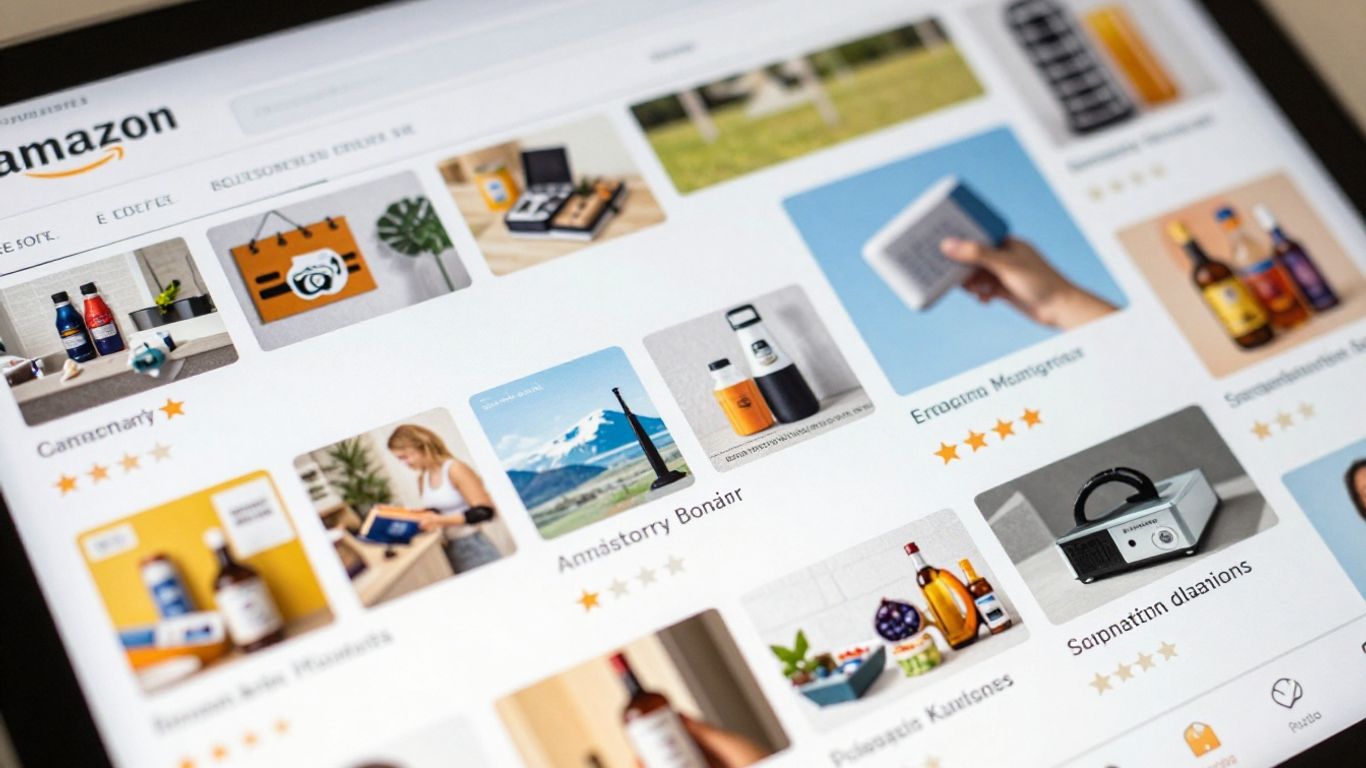
Let’s be real, we all judge a book by its cover, and on Amazon, your images are the cover. High-quality photos are non-negotiable. They need to be clear, well-lit, and show the product from multiple angles. Think about including lifestyle shots that show the product in use, as well as close-ups of key features. But here’s the thing many people overlook: mobile design. A huge chunk of Amazon shopping happens on smartphones. If your images are too small, blurry, or don’t load quickly on a mobile device, you’re losing potential customers. Make sure your main image is on a pure white background and clearly shows the product. Subsequent images can show different angles, features, infographics, and lifestyle shots. Test how your listing looks on a phone – does it scroll smoothly? Are the images sharp? Is the text readable? Optimizing for mobile isn’t just good practice; it’s essential for conversion in today’s market.
The Role of Reviews, Pricing, and Sales Velocity
Amazon doesn’t just look at keywords; it watches how shoppers actually behave. Think about it: if a product looks good on paper but nobody buys it, what’s the point? That’s where reviews, pricing, and how fast your product sells come into play. These aren’t just afterthoughts; they’re major signals to Amazon about your product’s real-world appeal.
Leveraging Social Proof for Higher Rankings
Reviews are like the word-of-mouth for online shopping. A product with a solid star rating and a good number of recent reviews tells Amazon (and potential buyers) that people are happy with it. It builds trust. Amazon favors products that customers seem to like, and that often means products with a healthy stream of positive feedback. It’s not just about having reviews, but the quality and recency of those reviews that seem to matter most.
- Aim for a consistent flow of new reviews. A sudden spike followed by silence isn’t as good as steady, regular feedback.
- Monitor your review sentiment. Are customers generally happy, or are there recurring complaints?
- Use Amazon’s "Request a Review" feature. It’s a simple, compliant way to encourage buyers to share their experience.
Competitive Pricing Strategies
Price is a big factor for shoppers, and Amazon knows this. While Amazon wants to make money, it also wants its customers to feel like they’re getting a good deal. Your pricing needs to be in the ballpark of similar products. If you’re way higher without a clear reason (like superior quality or unique features), shoppers will likely click away. On the flip side, pricing too low might signal lower quality or hurt your profit margins too much.
Here’s a quick look at how pricing can affect things:
| Factor | Impact on Ranking |
|---|---|
| Price | Directly influences click-through and conversion rates |
| Competitiveness | Compared against similar products in search results |
| Perceived Value | Does the price match the product’s offering? |
It’s a balancing act. You need to be competitive enough to attract clicks and sales, but also profitable enough to sustain your business.
Understanding Sales Velocity’s Impact
This is a big one. Sales velocity is simply how quickly your product is selling. Amazon loves products that sell well. Why? Because that means Amazon is making money, and its customers are happy. A product that’s flying off the virtual shelves sends a strong signal that it’s relevant, desirable, and performing well. Higher sales velocity often leads to better visibility and ranking. It’s a bit of a self-fulfilling prophecy: sell more, rank higher, sell even more. This is why focusing on conversion optimization is so important – it directly fuels your sales velocity.
When a product is out of stock, it loses its hard-earned ranking. Amazon doesn’t want to show customers products they can’t buy. So, keeping your inventory levels healthy is just as important as optimizing your listing for search. Running out of stock can seriously set back your sales momentum.
Think of these three elements – reviews, pricing, and sales velocity – as interconnected gears. Good reviews can boost conversion, leading to higher sales velocity. Competitive pricing can also drive conversions and sales velocity. And strong sales velocity? That can sometimes even help offset slightly weaker reviews or pricing, as Amazon sees the product is a proven seller.
Agency-Level Amazon SEO Strategies
Comprehensive Keyword and Indexing Strategies
Agencies approach keyword research differently than a solo seller might. It’s not just about finding a few good terms; it’s about building a complete map of how customers search for your product and related items. This involves looking beyond obvious keywords to uncover long-tail variations, competitor terms, and even misspellings that customers might use. The goal is to ensure your product is indexed for every possible relevant search query. This means a deep dive into Amazon Brand Analytics, competitor analysis, and using advanced tools to identify high-intent keywords that actually lead to sales, not just clicks. The aim is to capture demand at every stage of the buyer’s journey.
Full Product Listing Optimization
While individual sellers might tweak their titles and bullet points, agencies take a more holistic view of listing optimization. This includes:
- Title: Crafting a title that is both keyword-rich and compelling, balancing searchability with clickability.
- Bullet Points: Rewriting bullet points to focus on benefits and address potential customer questions upfront, while naturally weaving in important keywords.
- Description/A+ Content: Developing detailed product descriptions and A+ Content that not only informs but also persuades, using rich media and storytelling to reduce buyer hesitation and boost conversion rates.
- Backend Search Terms: Strategically filling backend fields with relevant keywords that might not fit naturally into the front-end copy, but are still important for indexing.
Image Optimization for Click-Through Rates
Images are often the first thing a shopper sees, and agencies understand their power. Optimization goes beyond just having good photos. It involves:
- Main Image: Ensuring the primary image is high-resolution, clearly shows the product on a white background, and meets Amazon’s strict guidelines.
- Lifestyle Images: Using secondary images that show the product in use, helping customers visualize themselves with it.
- Infographics: Creating graphics that highlight key features, benefits, and specifications in an easy-to-digest format.
- Alt Text: Writing descriptive alt text for each image, incorporating relevant keywords to aid both accessibility and search engine indexing.
Agencies treat every element of the listing as a conversion opportunity. They understand that a listing needs to perform well in search and convince the shopper to buy once they click through. This dual focus is what separates top-performing listings from the rest.
Aligning with Amazon’s Search Engine Principles

Think of Amazon not just as a place to list your products, but as a powerful search engine. People go there with the intention to buy, which makes its search algorithm a bit different from Google’s. Amazon’s main goal is to show customers the products they are most likely to purchase. So, understanding how Amazon’s search works from the ground up is key to getting your products seen.
The Search Box, Filters, and Results Page Dynamics
When a customer types something into the search bar, Amazon starts working. It shows them suggestions, and then presents a page of results. This page isn’t just a random list; it’s carefully put together. Filters play a big role here, letting shoppers narrow things down by price, delivery speed, customer ratings, and more. Your job is to make sure your product shows up when someone searches for it, and that it looks appealing enough for them to click on it from that results page. It’s a whole journey from the initial search term to the final purchase.
Utilizing Sales Rank and Sponsored Products
Amazon’s algorithm looks at a few things to decide what to show. One is the Sales Rank, which is basically a measure of how well your product is selling recently. Products that sell faster tend to rank higher. Then there are Sponsored Products. These are ads that can push your product to the top of the search results, even if its organic rank isn’t there yet. Using these ads strategically, alongside a strong organic SEO strategy, can really boost your product’s visibility across the board. It’s about making sure your product is seen in multiple places.
Treating Amazon as a Transactional Search Engine
This is a big one. Unlike Google, where people might be researching or just browsing, on Amazon, most shoppers are ready to buy. This means every impression your product gets is more valuable, and losing a click is more costly. Amazon’s algorithm is built around this transactional intent. It prioritizes products that are likely to convert a browser into a buyer. So, your listing needs to be optimized not just for keywords, but also for conversion. This means clear images, compelling copy, good reviews, and competitive pricing. If your listing doesn’t convince someone to buy quickly, Amazon might not show it to as many people.
Here’s a quick look at what Amazon prioritizes:
| Factor | Description |
|---|---|
| Sales Velocity | How quickly your product sells over a given period. |
| Conversion Rate | The percentage of people who view your listing and then buy the product. |
| Relevance | How well your listing content matches the customer’s search terms. |
| Customer Reviews | The quantity and quality of reviews your product has received. |
| Pricing | How competitive your product’s price is compared to similar items. |
| Listing Quality | How complete and appealing your product title, description, and images are. |
To do well on Amazon’s search, you need to follow their rules. Think about what customers are looking for and make sure your products are easy to find. This means using the right words in your descriptions and making sure your product pages are clear and helpful. When you align with Amazon’s search engine principles, you help shoppers discover your items more easily.
Conclusion
Making your products stand out on Amazon isn’t about magic tricks. It’s about understanding what Amazon cares about: helping shoppers find what they want and making a sale. By focusing on keywords people actually use, making your product pages clear and helpful, and showing that your product is a good choice (through reviews and sales), you can get your products seen more. Think of Amazon like a busy mall – you want your store to be easy to find, look good, and have what people are looking for. When you do this consistently, Amazon SEO becomes a reliable way to grow your business, not just a one-time fix.
Frequently Asked Questions
What is Amazon SEO?
Amazon SEO is like making your product listing easy for Amazon’s search engine to find and show to shoppers. It’s about using the right words and making your product page look good so more people see it and decide to buy.
Why is Amazon SEO important?
It’s important because most people on Amazon search for products instead of browsing. If your product doesn’t show up high in the search results, shoppers might never see it, and you’ll miss out on sales. Good Amazon SEO helps you get seen by the right buyers.
How is Amazon SEO different from Google SEO?
Google SEO is for helping people find websites for all sorts of reasons, like getting information. Amazon SEO is different because people on Amazon are usually looking to buy something right away. So, Amazon SEO focuses more on making sales happen.
What are the main things Amazon looks at for ranking?
Amazon looks at how well your product matches what the shopper searched for (relevance) and how well your product sells (performance). It also checks if your product has good reviews and a fair price.
How do I find the right keywords for my product?
You need to think like a shopper. What words would they type into the search bar? You can also use tools that show what keywords people are actually using on Amazon, especially those that show they’re ready to buy.
Do reviews really matter for Amazon SEO?
Yes, they matter a lot! Lots of good reviews tell Amazon that other shoppers liked your product. This makes Amazon more likely to show your product to new customers because it’s seen as trustworthy and popular.