Amazon Prime: Weighing the Pros and Cons in 2025
Thinking about selling on Amazon in 2025? It’s a big question many sellers are asking. Amazon is still a huge place to sell things, with tons of shoppers. But, like anything, there are good parts and bad parts to consider. We’re going to look at the pros and cons of Amazon Prime for sellers in 2025, so you can figure out if it’s the right move for you. It’s not as simple as it used to be, and understanding the details is key.
Key Takeaways
Amazon offers access to a massive customer base and builds trust quickly, which is a big plus for sellers wanting to grow.
Fees are a major factor; sellers need to carefully calculate referral fees, fulfillment costs, and storage charges to understand their real profit.
Fulfillment by Amazon (FBA) handles logistics, making things easier and qualifying products for the Prime badge, which often boosts sales, but it comes with its own set of costs and less control.
Buy with Prime lets brands get customer data and offers a smooth checkout, but it has its own fees, branding limits, and data use rules.
Consumer behavior is changing due to inflation and deal fatigue, meaning shoppers are more careful with their money, which can affect sales even on a platform like Amazon.
The Allure Of Amazon Prime: Why Sellers Flock To The Platform
Alright, let’s talk about why so many sellers, from tiny startups to established brands, still look at Amazon like it’s the promised land of eCommerce. It’s not just about throwing your product onto a website and hoping for the best; it’s about tapping into something massive.
A Universe Of Shoppers At Your Fingertips
Think about this: over 63% of shoppers in the US start their online searches on Amazon. That’s more than Google for many product searches! People aren’t just browsing; they’re ready to buy. They’ve got their payment info saved, their shipping addresses sorted, and they’re often looking for that little Prime badge to tell them it’s a good deal with fast shipping. It’s like having a storefront on the busiest street in the world, but online.
The Shortcut To Consumer Trust
Building trust with customers takes ages. You need a slick website, good reviews, and a reputation for reliability. Amazon skips a lot of that heavy lifting. When a customer sees your product on Amazon, especially with the Prime badge, they already have a certain level of confidence. They know Amazon has a process for returns, customer service, and generally getting things to their door quickly. It’s like borrowing Amazon’s good name to get your product noticed.
Prime Badge: The Golden Ticket To Conversions
This is the big one. That little Prime logo next to your listing? It’s practically magic for sales. Studies and real-world experience show that products with the Prime badge often see a significant jump in sales, sometimes even doubling them. Why? Because it signals fast, free shipping and a hassle-free buying experience. For shoppers, it’s a clear indicator of convenience and reliability, and for sellers, it’s often the difference between a sale and a lost opportunity. It’s the closest thing to a guaranteed conversion booster you’ll find on the platform.
Navigating The Maze Of Amazon Fees: Where Does Your Profit Go?
So, you’ve decided to jump into the Amazon marketplace. That’s great! But before you start dreaming of dollar signs, let’s talk about the not-so-glamorous side: the fees. Amazon doesn’t exactly run a charity, and they’ve got a whole system in place to make sure they get their cut, sometimes before you even see a penny. It’s like a financial obstacle course, and if you’re not paying attention, your profits can disappear faster than free samples at Costco.
The Service & Fulfillment Tango
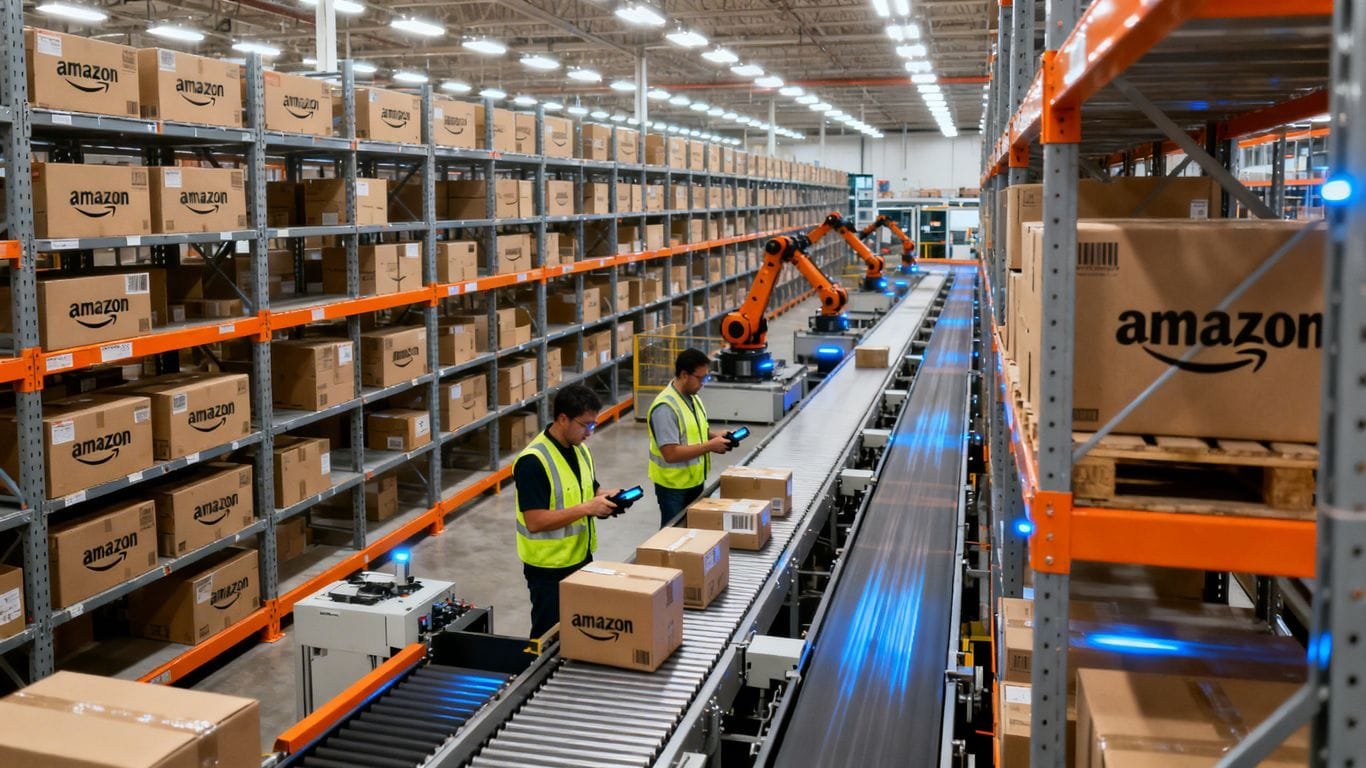
When you choose Fulfillment by Amazon (FBA), you’re handing over the keys to your inventory kingdom. Amazon stores your products, picks them when an order comes in, packs them up, and ships them out. Sounds easy, right? Well, it is, but it comes at a price. These FBA fees cover all that handling, and they can add up. They’re usually based on the size and weight of your item, and they can range from a few bucks to a significant chunk of your sale price. It’s a trade-off: convenience for a cost.
Payment Processing: The Unavoidable Cut
Every time someone buys something from you, Amazon needs to process that payment. And guess what? They charge a fee for that service. This is often a percentage of your total sale price, plus a small fixed amount per transaction. It’s a standard practice in the online selling world, but it’s another slice taken from your revenue pie before it even reaches your bank account. You can find more details on these rates on Amazon’s seller central.
Storage Fees: The Longer You Stay, The More You Pay
This is where things can get a bit tricky, especially if your products aren’t flying off the virtual shelves. Amazon charges you to store your inventory in their warehouses. These fees are typically calculated per cubic foot, and they change depending on the time of year. During peak seasons, like the holidays, these storage fees can skyrocket. If your products sit in Amazon’s fulfillment centers for too long, you could end up paying more in storage fees than you’re making on the sales. It’s a good reminder to keep your inventory lean and your sales moving.
The reality is that fees on Amazon can easily eat up 40-50% of your gross revenue. This means that a product you sell for $20 might only net you $6-$8 in profit before you even factor in your own costs like advertising or the actual cost of the product itself.
Here’s a general idea of what you might be looking at:
Referral Fees: These vary by product category, often between 8% and 15% of the sale price.
FBA Fulfillment Fees: Based on item size and weight, these cover picking, packing, and shipping.
Monthly Storage Fees: Charged per cubic foot, these rates increase during peak seasons.
Long-Term Storage Fees: Applied to inventory that has been in an Amazon fulfillment center for over 180 days.
Payment Processing Fees: A small percentage plus a fixed fee per transaction.
Fulfillment By Amazon (FBA): A Double-Edged Sword

So, you’re thinking about letting Amazon handle your stuff? Fulfillment by Amazon, or FBA, sounds like a dream come true for many sellers. Imagine this: you send your products to Amazon’s giant warehouses, and they take care of the rest – storing, packing, shipping, and even dealing with customer returns. It’s like having a massive, invisible logistics team working for you 24/7.
The Convenience Of Amazon Handling It All
This is where FBA really shines. You get to ditch the headaches of managing your own inventory, figuring out shipping labels, and wrestling with carriers. Amazon’s got a huge network of fulfillment centers, so your products can be closer to customers, speeding up delivery times. Plus, they handle customer service inquiries and returns, which can be a real time-saver. It frees you up to focus on, well, selling more stuff and maybe even taking a vacation.
Storage: Amazon keeps your products safe and sound in their warehouses.
Packing & Shipping: They pick, pack, and ship orders out to customers.
Customer Service: Amazon handles most customer questions and issues.
Returns: They process returns, saving you that particular brand of administrative pain.
Prime Eligibility: A Sales Supercharger
This is the big one. When your products are FBA-eligible, they get that coveted Prime badge. For the millions of Amazon Prime members out there, this badge is practically a green light to buy. They expect fast, free shipping, and FBA delivers. Listings with the Prime badge often see a significant bump in conversion rates – sometimes even doubling or tripling compared to non-Prime items. In today’s competitive marketplace, not having that badge can make it tough to get noticed.
For many sellers, the Prime badge isn’t just a nice-to-have; it’s a near necessity for visibility and sales volume on the platform.
The Downsides Of Outsourcing Your Operations
Now, for the not-so-fun part. All this convenience comes at a cost, and it’s not just about the fees (though we’ll get to those). You’re handing over a significant chunk of your operation to a third party. This means less direct control over your inventory and how your products are presented. Amazon’s packaging is pretty generic, which can make it harder to build your own brand identity. And let’s not forget the competition – you’re not just competing with other sellers, but sometimes with Amazon itself.
Here’s a quick look at some of the potential snags:
Fees, Fees, Everywhere: Storage fees, fulfillment fees, referral fees – they all add up and can significantly trim your profit margins. Long-term storage fees can become particularly brutal if your products aren’t moving.
Inventory Management: While Amazon handles it, you might feel a bit disconnected from your stock. Keeping track of what you have and when to reorder requires careful planning.
Branding Limitations: Amazon’s standard packaging doesn’t offer much room for your brand’s personality. You can’t easily include custom inserts or branded boxes.
Returns Can Be Tricky: While Amazon handles returns, the process isn’t always in your favor, and you might not always get full credit for returned items, especially in certain categories.
Buy With Prime: Expanding Amazon’s Reach, But At What Cost?
So, Amazon’s decided to take its Prime magic beyond its own digital shelves and offer it on other websites. It’s called ‘Buy with Prime,’ and it lets brands slap that familiar Prime badge on their own sites, promising customers the speedy, free shipping they’ve come to expect. Sounds pretty neat, right? For brands, it’s like getting a shortcut to that sweet, sweet consumer trust that Amazon has built over years. Plus, Amazon handles the whole fulfillment song and dance – storing your stuff, shipping it out, and dealing with returns. This could be a lifesaver if your own logistics are more of a tangled mess than a well-oiled machine.
Seamless Checkout For Customers, Simplified Logistics For Brands
This is where Buy with Prime really shines for the shopper. They see the Prime logo, and bam – they know what they’re getting. They can use their saved Amazon payment and shipping info, which means fewer clicks and less chance of them abandoning their cart mid-purchase. For the brand, it means Amazon’s massive warehouse network is now working for you. Think less stress about inventory management and more time to actually, you know, run your business. It’s a win-win, theoretically.
Gaining Customer Data: A New Frontier For Brands
Here’s a bit of a curveball. Unlike the regular Fulfillment by Amazon (FBA) where Amazon keeps the customer details pretty locked down, Buy with Prime actually gives brands some of that juicy customer data back. We’re talking names, email addresses, and shipping addresses. This means you can actually start building your own customer list, sending out your own marketing emails, and maybe even building a bit more loyalty directly with your buyers. It’s a step towards owning that customer relationship, which is always a good thing.
The Hidden Costs And Branding Limitations
Now, let’s talk about the “at what cost?” part. While Amazon is doing the heavy lifting, they’re not doing it for free. There are fees involved, and they can add up. You’ve got a service fee (3% of the order value, minimum $1), a fulfillment fee that varies by size and weight, and a payment processing fee (2.4% plus $0.30). For brands with already tight margins, these costs could eat into profits pretty significantly.
Fee Type | Cost |
|---|---|
Service Fee | 3% of order value (min. $1) |
Fulfillment Fee | Starts at $5.33 per unit (varies) |
Payment Processing | 2.4% of order value + $0.30 per order |
Beyond the money, there’s the branding aspect. The Buy with Prime button is pretty standard. You don’t get a ton of wiggle room to make it look exactly how you want, which might clash with your brand’s overall look and feel. Also, while you get customer data, Amazon puts some restrictions on how you can use it, especially when it comes to retargeting ads on other platforms. You can’t exactly tell Facebook, “Hey, this person is a Prime member who bought from me!”
Before jumping on the Buy with Prime bandwagon, it’s smart to crunch the numbers. See if your profit margins can handle the extra fees. Also, think about how much control you really want over your customer experience and data. It’s a trade-off between convenience and autonomy.
The Shifting Sands Of Consumer Behavior In 2025

Alright, let’s talk about what’s really going on with shoppers in 2025. It feels like just yesterday everyone was chasing the next big deal, but things are definitely changing. Inflation, while maybe not as wild as it was, has definitely made people think twice about their spending. It’s like we all collectively learned to be a bit more careful with our money, and that caution isn’t just disappearing overnight.
Inflation’s Grip: Shoppers Prioritizing Essentials
So, what does this mean for your products? Well, people are still buying, but they’re being pickier. Think less impulse buys and more
Is Selling On Amazon Still A Golden Opportunity?
So, you’re thinking about jumping into the Amazon selling arena in 2025. It’s a fair question to ask if it’s still the gold rush it once seemed. Let’s be real, Amazon is practically synonymous with online shopping. Over 63% of folks in the US start their product searches there, even if they’re already standing in a brick-and-mortar store. That’s a massive audience, and for new brands, it’s like a shortcut to trust. You get to piggyback on Amazon’s reputation for fast shipping and easy returns, which would take ages to build on your own. Plus, with 86% of merchants using Fulfillment by Amazon (FBA), it’s clear the platform offers serious logistical advantages.
The Unmatched Reach Versus Rising Competition
Amazon offers access to billions of shoppers, a number that’s hard to ignore. However, this vast marketplace is also incredibly crowded. We’re talking over 9.7 million sellers globally, with about 2 million actively selling at any given time. Many of these are seasoned pros who know how to game the search results and run slick ad campaigns. You’ll also find manufacturers from overseas willing to sell at rock-bottom prices, and let’s not forget the persistent headache of counterfeiters and unauthorized sellers who can really mess with your brand. It’s a bit like a bustling city – lots of opportunity, but you’ve got to fight for your spot on the sidewalk.
Strategic Selling: The Key To Thriving
If you’re serious about making it work on Amazon in 2025, you can’t just wing it. It requires a smart plan. Here’s a quick rundown of what that looks like:
Niche Down: Don’t try to sell everything to everyone. Find a specific product category with demand but manageable competition.
Listing Optimization: Your product title, description, and images are your storefront. Make them shine and include relevant keywords.
Ad Campaigns: Budget for Amazon advertising. It’s often necessary to get your products seen amidst the noise.
Inventory Management: Keep a close eye on your stock levels to avoid stockouts or excessive storage fees.
Customer Service: Even with FBA, responding to customer inquiries promptly can make a difference.
The economics of selling on Amazon can be tricky. Fees – referral, FBA, storage, and return costs – can easily eat up 40-50% of your gross revenue if you’re not careful. It’s vital to crunch the numbers before you commit.
When To Think Twice Before Diving In
While Amazon FBA can be a game-changer for simplifying operations and reaching customers, it’s not for every business. If your primary goal is to build a strong, independent brand with direct customer relationships, Amazon’s limitations might be a deal-breaker. You don’t get direct access to customer emails, and you’re generally forbidden from directing shoppers to your own website. This means Amazon owns the customer relationship, not you. Also, if razor-thin margins are your only path to profit, the rising fees and intense competition might make it a tough go. It’s worth exploring other channels or a hybrid approach if brand control and higher profit margins are paramount. For those willing to put in the work and adapt, Amazon FBA remains a profitable venture in 2025, but it demands a strategic approach.
Is selling on Amazon still a great chance to make money? While it’s true that many people have found success, it’s not as easy as it used to be. You need to be smart and know what you’re doing to stand out. If you want to learn how to really make it work for you, check out our website for tips and help. We can show you how to make your Amazon business thrive!
So, Is Amazon Prime Still Worth It in 2025?
Alright, let’s wrap this up. After all that talk about fees, shipping speeds, and whether you can actually make a profit, the big question remains: is Amazon Prime still the golden ticket in 2025? Honestly, it’s not as simple as a ‘yes’ or ‘no.’ For some, it’s still a powerhouse for getting stuff fast and finding deals, almost like a digital convenience store that never closes. But for sellers, it’s gotten trickier. The costs can pile up faster than you can say ‘add to cart,’ and you’re definitely not building your own brand empire on Amazon’s rented shelf space. So, if you’re a shopper, keep enjoying that two-day delivery, but if you’re a seller, tread carefully. Do your homework, crunch those numbers, and maybe, just maybe, don’t put all your eggs in the Amazon basket. It’s a tool, and like any tool, it’s only as good as how you use it – and whether it’s the right one for the job.
Frequently Asked Questions
Why do so many sellers want to sell on Amazon?
Amazon is like a giant online mall with billions of shoppers visiting every month. It’s a great place to get your products seen by lots of people. Plus, when you sell on Amazon, customers tend to trust you more because they already trust Amazon’s name and its promise of good service and fast shipping.
What are the main costs involved in selling on Amazon?
Selling on Amazon involves several fees. There are fees for selling, for storing your products, and for Amazon to ship them out (if you use their service called FBA). They also take a small cut of each sale for processing payments. It’s important to understand all these costs so you know how much money you’re actually making.
What is Fulfillment by Amazon (FBA), and is it always good?
FBA means you send your products to Amazon’s warehouses, and they handle all the storing, packing, shipping, and even returns. It’s super convenient and makes your products eligible for the Prime badge, which many shoppers love. However, it can get expensive, especially if you store items for a long time, and you have less control over your inventory.
What is ‘Buy with Prime’ and what are its downsides?
‘Buy with Prime’ lets customers use their Prime benefits to buy products directly from a brand’s own website, not just on Amazon. It makes checkout super easy for customers and can boost sales. But, there are fees for brands, and you have less control over how the checkout looks on your site. Also, Amazon limits how you can use the customer data you get.
Are shoppers still buying as much on Amazon in 2025?
Shoppers are being more careful with their money in 2025 because of rising prices. They’re focusing more on buying essentials and looking for deals. While Amazon is still popular, big sales events might not be as exciting as they used to be, and people are comparing prices more often.
Is it still a good idea to start selling on Amazon in 2025?
Yes, selling on Amazon can still be a great opportunity because of its huge customer base. But it’s not as easy as it used to be. Competition is tough, and costs are going up. To do well, you need to be smart about what you sell, make your product listings look amazing, and advertise effectively. It requires more planning than before.